
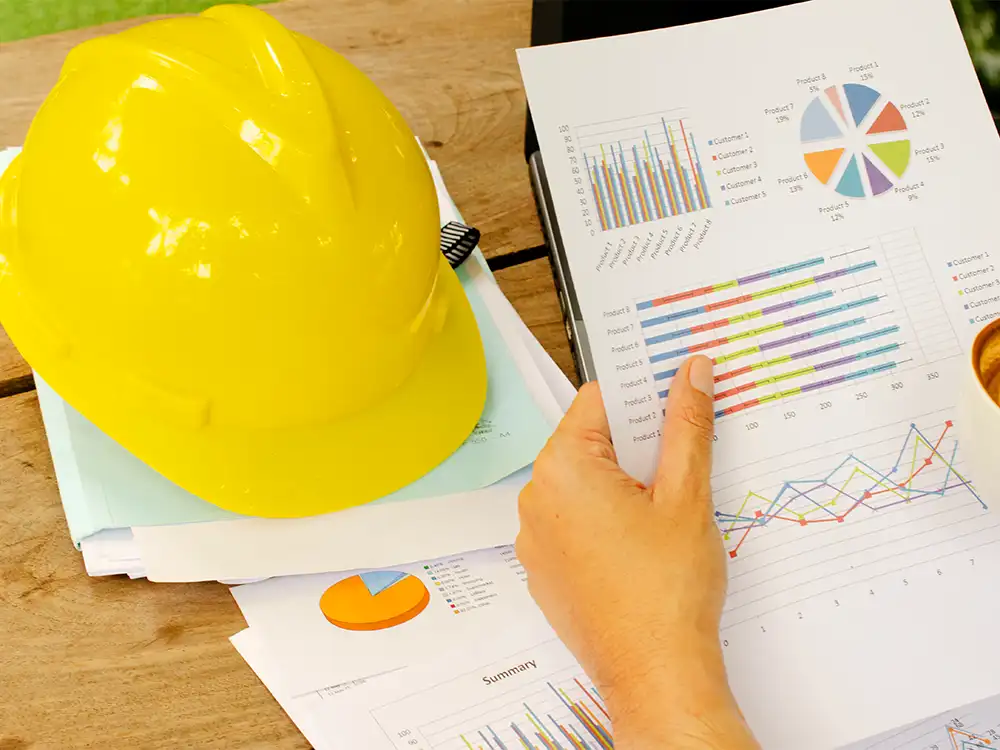
Examples of KPIs for measuring occupational health performance, plays a critical role in establishing a sustainable and safe working environment for modern businesses.
Not only the number of occupational accidents, but also many proactive and reactive indicators such as training rates, frequency of risk assessments, near miss incident notifications constitute the basic building blocks of corporate OHS success.
Sürmen OSGB, By configuring these KPIs in an industry-specific way, it makes performance tracking measurable and manageable.
You too. OSGB if you are looking for a company Sürmen OSGB and get detailed information.
You too. OSGB if you are looking for a company isg services You can visit our page.

What are Examples of KPIs for Measuring Occupational Health Performance?
What is KPI and Why is it Important in Occupational Health Performance?
Basic Definition: What is a KPI?
Examples of KPIs for measuring occupational health performance, is of great importance for businesses to be able to quantitatively evaluate their safety and health practices.
KPI (Key Performance Indicator), known as “Key Performance Indicator” in Turkish, are measurable values that indicate the extent to which a specific goal has been achieved.
In the field of occupational health and safety, KPIs allow monitoring not only of processes but also of results.
The Importance of Using KPIs in OHS Processes
Examples of KPIs for measuring occupational health performance, It is used to see the effectiveness of the OHS system, identify areas for improvement and build a sustainable safety culture.
For example, training participation rate, number of work accidents, reported near misses or completed risk assessments are KPIs.
Thanks to these indicators, businesses can track not only legal obligations but also operational efficiency.
Making Occupational Health Performance Traceable with Sürmen OSGB
Examples of KPIs for measuring occupational health performance, only becomes truly useful through a systematic approach.
Surmen OSGB, develops customized KPI sets according to the sector, risk level and number of employees of enterprises, making occupational health processes measurable and manageable.
Reports KPI results periodically Sürmen OSGB, By integrating this data into decision-making processes, OHS ensures that OHS performance is not only monitored but also continuously improved.
Preventive (Proactive) OHS KPI Examples
Completed Risk Assessment Rate
Examples of KPIs for measuring occupational health performance One of the most critical metrics is the completed risk assessment studies.
Identifying hazards in the workplace in advance and taking precautions prevents accidents before they occur.
Sürmen OSGB, periyodik risk değerlendirmelerini sistemli şekilde tamamlayarak bu oranın %100’e yakın tutulmasını hedefler.
Number and Rate of Trainings Attended
The number of occupational health trainings provided to employees and the participation rate in these trainings are key indicators of a proactive approach.
Examples of KPIs for measuring occupational health performance This data reflects the extent to which the safety culture is adopted within the organization.
Sürmen OSGB, regularly plans trainings in accordance with the legislation and makes them auditable by documenting the participation of all employees.
Number of Internal Audits/Exercises Conducted
Internal audits and emergency drills, such as fire drills, are important for recognizing deficient practices and intervening immediately.
Therefore, examples of KPIs for measuring occupational health performance This indicator is also included in the list of indicators.
Sürmen OSGB, The Company determines the number of planned audits and drills each year and ensures that these KPIs reach their year-end targets.
Hazard Reports Reported Before the Accident Occurs (Near Miss)
The number of near misses, or “near misses”, is an effective indicator of high awareness in the workplace and the preventive reflexes of employees.
Examples of KPIs for measuring occupational health performance This data is an important step towards zero accidents.
Sürmen OSGB, ensures that this indicator is monitored by establishing systems that encourage employees to report hazards.
You too. What an OSGB company brings to your business If you are curious about the answer to the question linkyou can visit our page.
Reactive OHS KPI Examples
Number of Work Accidents Realized
Examples of KPIs for measuring occupational health performance One of the most widely known and used indicators is the number of occupational accidents.
This data, which directly reflects the security level of the business, plays a critical role in both internal audits and official reporting.
Sürmen OSGB, monitors this data on an annual and monthly basis and ensures that accidents are prevented from recurring by getting to the root causes of accidents.
Number of Lost Work Days (LTI - Lost Time Injury)
The number of days a worker is unable to return to work after an occupational accident measures the loss of labor and the negative impact on productivity.
Examples of KPIs for measuring occupational health performance This metric also shows the financial impact of occupational accidents on the business.
Sürmen OSGB, organizes rapid response and effective rehabilitation processes after accidents to minimize LTI.
Number of Occupational Disease Notifications
Diseases caused by factors such as dust, noise, vibration and chemical exposure in the long term pose a great risk to workers' health.
Examples of KPIs for measuring occupational health performance The number of occupational disease notifications evaluates the effectiveness of preventive health policies.
Sürmen OSGB, provides early diagnosis through regular health screenings and manages notification processes correctly.
Accident Frequency and Severity Rate Calculations
The severity of occupational accidents should be assessed as well as their number. While the accident frequency rate indicates the intensity of accidents over a given period of time, the severity rate describes the impact of accidents on the loss of workforce.
Examples of KPIs for measuring occupational health performance These calculations give important clues about the risk profile of the business.
Sürmen OSGB, calculates these ratios according to international standards and periodically reports them to the management.

How to Institutionalize KPI Tracking for Employers?
Things to Consider in the KPI Identification Process
Examples of KPIs for measuring occupational health performance, It makes sense not only to identify, but also to choose with the right strategy.
KPIs should be selected in accordance with the sector, employee profile, scope of activity and degree of risk.
Sürmen OSGB, By creating KPI maps specific to businesses, it ensures that targets are realistic, traceable and meaningful.
Customized Metrics Based on Workplace Goals
Each organization may have different OHS priorities. In some workplaces, the most important KPI is training rates, while for others the number of near-miss notifications may be critical.
Examples of KPIs for measuring occupational health performance, should be shaped according to these differences.
Sürmen OSGB, By determining indicators in line with the strategic goals of employers, it puts performance monitoring into an institutional structure.
Integration of KPI Results to Senior Management and Field Team
For the KPIs to make sense, they should not only remain within the OHS department.
Examples of KPIs for measuring occupational health performance, It should be interpreted in a way that everyone, from management to field staff, can understand and contribute to.
Sürmen OSGB, disseminates KPI data to the entire organization through periodic reporting and visual dashboard systems.
Sürmen OSGB's Digital Tracking and Reporting Support
Tracking KPIs manually is both time consuming and increases the risk of error.
Sürmen OSGB, provides great convenience to employers with digital-based OHS software and automated reporting systems.
Examples of KPIs for measuring occupational health performance, This makes it instantly traceable, comparable and updatable when necessary.
The Role of Occupational Health KPIs in the Continuous Improvement Process
Performance Comparisons and Trend Analysis
Examples of KPIs for measuring occupational health performance, is used not only to show the current situation, but also to track development over time.
Measuring KPIs at regular intervals allows for trend analysis and a clear view of whether performance is improving.
Sürmen OSGB, provides strategic insights to businesses by presenting these analyzes on a yearly basis with graphs.
Process of Identifying Weak Areas and Taking Action
Declines in OHS practices or KPIs that fail to meet targets indicate areas that need direct intervention.
Examples of KPIs for measuring occupational health performance, works like an early warning system in this respect.
Sürmen OSGB, Thanks to these KPIs, it identifies areas that pose risks in advance and develops remedial action plans.
KPI Effect in Strengthening OHS Culture
An occupational health system that is continuously measured, evaluated and improved transforms into a corporate safety culture over time.
Examples of KPIs for measuring occupational health performance, increases employee awareness, because in a system that is monitored by numbers, everyone's contribution becomes visible.
Sürmen OSGB, By involving all employees in this process, it creates both awareness and a sense of ownership.
Data-Driven Improvement Strategies with Sürmen OSGB
Today, occupational health management is not just about taking precautions; it is a process supported by data analysis, reporting and strategic decisions.
Sürmen OSGB, not only tracks KPI data, but also uses this data to help businesses build safer, more efficient and sustainable OHS systems.
Examples of KPIs for measuring occupational health performance, is the basic building block of this strategic improvement process.