
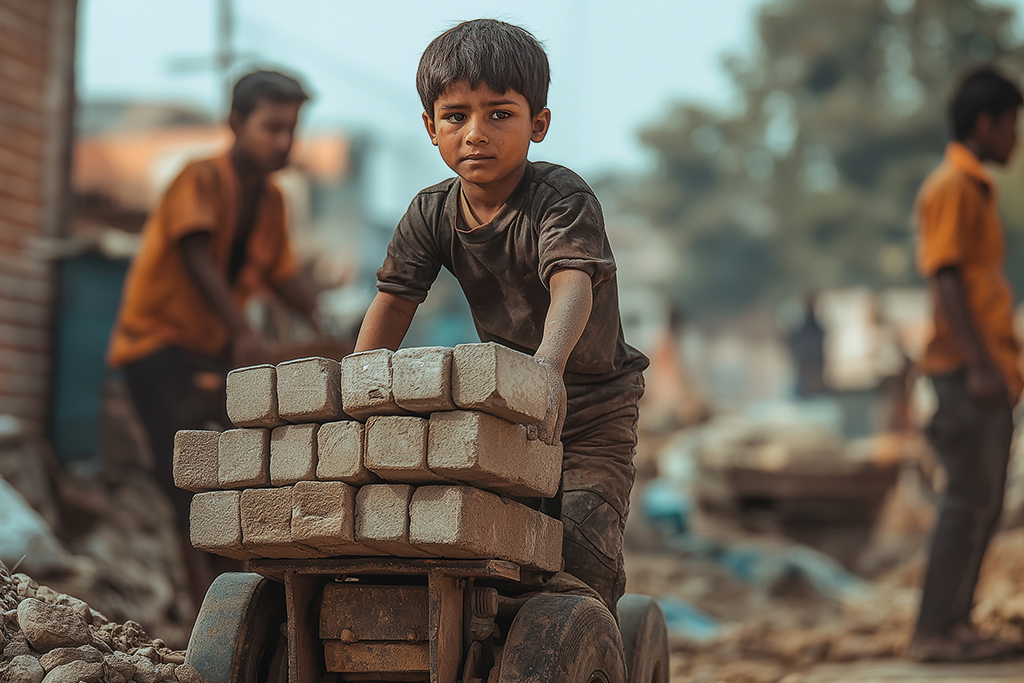
Child labor is one of the most important problems of today's working life that is still waiting to be solved, not only as a result of socioeconomic inequalities, but also as a result of inadequate supervision, social insensitivity and employer unconsciousness. According to the International Labor Organization, more than 160 million children worldwide are involved in economic activities. In Turkey, although this number is not clear, it is remarkable especially in sectors such as seasonal agriculture, construction and industry.
From an occupational health and safety perspective, child labor represents a much more complex and dangerous form of risk. This article explains why child labor needs to be addressed with special attention in the context of OHS by evaluating it together with legal regulations, physiological and psychosocial risk factors.
Working Environments Incompatible with the Anatomical and Psychosocial Development of the Child
The inclusion of children in the labor market is in direct conflict with their anatomical developmental processes. When individuals with incomplete musculoskeletal, respiratory and neural development are exposed to the same working environments as adults, they face short-term occupational accidents as well as irreversible occupational health problems in the long term.
Moreover, children's perception of danger and their reactions to crisis situations vary according to their age, and their capacity to respond to emergencies is quite low. This situation leads to serious vulnerabilities in terms of both individual and organizational OHS policies.
Child Labor in Occupational Health and Safety Risk Assessments
Under Law No. 6331 on Occupational Health and Safety, one of the most fundamental responsibilities imposed on employers is to identify the hazards to which employees may be exposed in advance by conducting risk assessments and to take the necessary measures. However, it is observed that these analyses are mostly carried out on adult individuals, and in the case of child labor, sufficient customized measures are not taken.
Risk analysis in workplaces where child workers are employed should be subjected to a separate assessment process, taking into account the physiological and psychosocial characteristics of children. Parameters such as the amount of load they can lift, the level of absorption of chemicals they can be exposed to, their sensitivity to environmental factors such as temperature and humidity should all be redefined.
Legal Framework and Regulatory Mismatches
The most basic regulations on child labor in Turkey are found in Article 71 of the Labor Law No. 4857 and the Regulation on the Procedures and Principles of Employment of Child and Young Workers. According to this;
- Employment of children under 15 years of age is prohibited.
- Individuals between the ages of 15 and 18 may only be employed in light work that does not harm their physical and mental development and does not interfere with school hours.
In practice, however, the effectiveness of these regulations largely depends on the sector and region of the workplace and the frequency of inspections. Unregistered employment causes children to be “invisible workers” in agriculture and small-scale manufacturing sectors. This leads to work accidents either not being reported at all or not being included in official records as “child labor”.
The Role of OHS Professionals in the Prevention of Child Labor
Occupational safety experts, occupational physicians and other health personnel should not only play a supervisory role in combating child labor, but also an educational and guiding role. OHS professionals should be aware that employing child labor in workplaces is a direct violation of health and safety and should inform the employer accordingly.
In addition, when providing services in sectors where there is a risk of child labor (construction, textile, food production, recycling, etc.), the age profile of employees in the workplace should be specifically analyzed, and internal awareness trainings and internal audit mechanisms should be supported.
As Sürmen OSGB, we prioritize not only compliance with legal regulations but also the establishment of an occupational health and safety culture based on ethical values.
Child labor is not just an employment issue; it is a multidimensional problem that threatens social conscience, public health and safe working order in workplaces. From an occupational health and safety perspective, the protection of child workers is critical not only for their lives, but also for the safety of other employees in the workplace and for corporate sustainability.
As Sürmen OSGB, we will continue to work with all our strength to spread this awareness; we will continue to contribute to a future where children do not have to work and have the right to education and play.