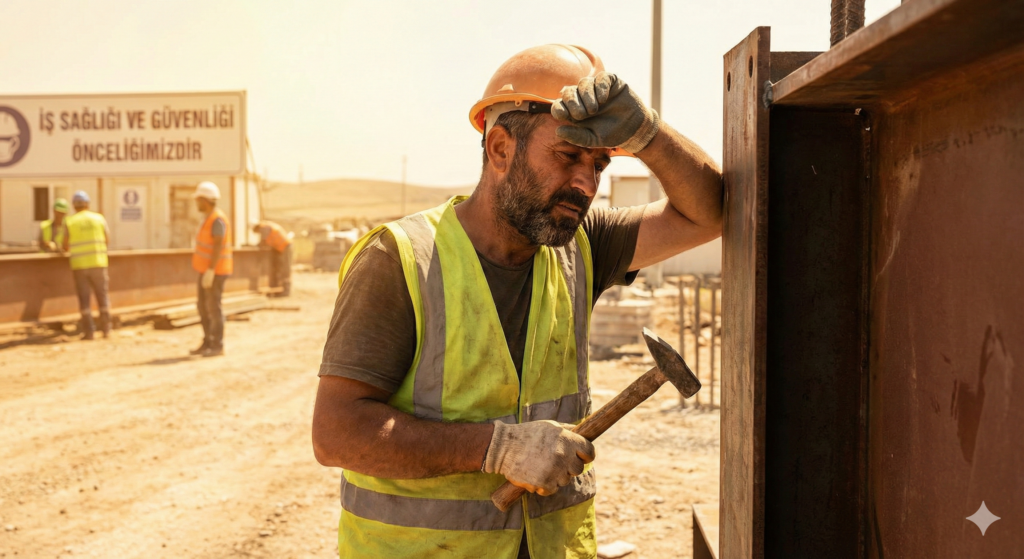
Ramadan is a time of spiritual purification and solidarity for millions of people, but it is also a time when daily routines change radically. Factors such as altered sleep patterns, prolonged hunger and thirst, especially heavy and dangerous work can have serious physical and mental effects on the individuals working. In workplaces classified as “Very Dangerous”, such as construction sites, mines, foundries, heavy industrial plants and logistics warehouses, even the slightest distraction can lead to irreversible occupational accidents.
Sürmen OSGB that we have adopted “Occupational Safety; It is not a law, it is the value you give to your employees” philosophy, we address how to optimize health and safety standards in workplaces during Ramadan in this comprehensive guide. Our aim is both to support employees to fulfill their spiritual obligations in a healthy manner and to help businesses reduce the risk of occupational accidents to zero.
Basic Physiological and Mental Changes in Fasting Workers
Even at normal times, the body of a worker engaged in heavy exertional work requires high amounts of calories and fluids. Interrupting this cycle during Ramadan has physiological consequences that can directly threaten occupational safety:
1. Dehydration (Serious Fluid Loss)
The greatest danger especially for workers who work in hot weather or in high-temperature indoor environments such as furnaces and foundries is fluid loss. When water and electrolytes (sodium, potassium) excreted from the body through sweating are not replaced, blood volume decreases. This can result in dizziness, blackouts, muscle cramps, severe headaches and ultimately heat syncope (heat fainting). A momentary dizziness experienced by a construction worker working at height or an operator of heavy machinery can have fatal consequences.
2. Hypoglycemia (Low Blood Sugar)
It is inevitable that blood sugar levels will drop to dangerous levels in the afternoon and towards iftar. The brain's main energy source is glucose. When blood sugar levels drop, workers suffer from attention deficit, prolonged reaction times, difficulty focusing, irritability and poor judgment. Occupational safety in terms of the risk of trapping a limb or falling from a height on machines with moving parts, this increases exponentially.
3. Sleep Deprivation and Chronic Fatigue
The interrupted night's sleep due to rising for suhoor disrupts REM and deep sleep cycles. Starting the day with insufficient sleep, the worker experiences physical fatigue as well as mental lethargy. Sleepiness is an unacceptable risk factor, especially for forklift operators, crane users and personnel working with hazardous chemicals.
Strategic Measures for OHS Professionals and Employers
Under Law No. 6331 on Occupational Health and Safety, employers are obliged to ensure the work-related health and safety of employees. While fasting is a personal choice, employers have a legal and moral obligation to make the work environment safe for these new conditions. Occupational safety specialist and workplace physician steps that need to be implemented in coordination are the following:
Dynamic Risk Analysis Special for Ramadan
The current risk assessment is based on normal working conditions. During Ramadan, this risk analysis update or conduct an additional assessment. Identify which shifts are riskier and which tasks, combined with hunger and thirst, rise to the level of intolerable risk (Red Zone).
Revision of Shifts and Working Hours
The most challenging hours for fasting workers are between 14:00 in the afternoon and iftar. By organizing work:
- Work that requires excessive effort, heavy lifting or intense physical exertion should be shifted to the early morning hours (between 08:00 and 12:00).
- In the afternoon hours, tasks that are more automated and have a light physical load, such as fine labor or organizing/cleaning, should be planned.
- If possible, flexible working hours should be implemented and shifts should end before iftar, or long breaks should be created to allow employees to break their fast and rest.
Ergonomic Arrangements and Task Rotation
Working in the same position for a long time or doing repetitive movements accelerates fatigue. Task rotation (job change) should be done more frequently during this period. If a worker is doing a heavy crushing job under the sun, after 1-2 hours he/she should retire to a lighter job in a shaded area and be replaced by a rested staff member.
Improving the Working Environment
Indoor ventilation systems (HVAC) should be operated at full capacity to reduce the ambient temperature to an optimum level. For those working outdoors, mobile shades, resting tents and cooling areas should be created. Industrial fans can be used in these areas to lower the ambient temperature.
Involving the Workplace Physician in the Process and Health Surveillance
Sürmen OSGB professional occupational physicians take a proactive role during this critical period.
- Identification of Chronic Patients: Employees with diabetes, blood pressure, heart disease, kidney failure or neurological diseases (epilepsy, etc.) that require regular medication should be identified. These employees should be interviewed one-on-one to explain the medical risks of fasting and, if necessary, be temporarily suspended from hazardous work on health grounds.
- Education and Awareness Raising: Short trainings on “Healthy Fasting and Occupational Safety” should be given to workers before the start of Ramadan. In these trainings, it should be explained that complex carbohydrates (whole wheat, oats), fibrous foods and quality proteins (eggs, cheese) should be consumed at sahur and that heavy meals should not be eaten suddenly at iftar. It should also be emphasized that diuretic drinks such as tea and coffee should be avoided during sahur.
Emergency Preparedness and First Aid
Despite all precautions, it is important to ensure that the business Emergency Action Plan must be in place. In the event of a fasting employee fainting, heat stroke or low blood sugar, first aid teams must be capable of intervening within seconds. First aid cabinets should be stocked and stretchers and emergency vehicles should be kept ready for use at all times. It should not be forgotten that; “No job can be so urgent and important that you risk your life.”
A Safe and Efficient Working Environment with Sürmen OSGB
The sustainable success of your business is only possible by protecting the physical and mental integrity of your employees. Surviving Ramadan without accidents and losses in heavy and dangerous work requires serious planning that cannot be left to chance.
Having proven its quality at international standards with its long years of experience in the sector, TÜRKAK-approved ISO 9001 and ISO 27001 certificates Sürmen OSGB; expert in the field occupational safety experts, workplace physicians, other health personnel and fully equipped mobile health vehicles is at your side.
From periodic examinations of your employees to updating risk analyses, from field inspections to emergency drills, put all your OHS processes in professional hands. Contact our expert support unit today to manage the risks in your workplace, fulfill legal obligations and most importantly, to show the value you give to people.
Remember, prevention is always cheaper and more humane than cure.