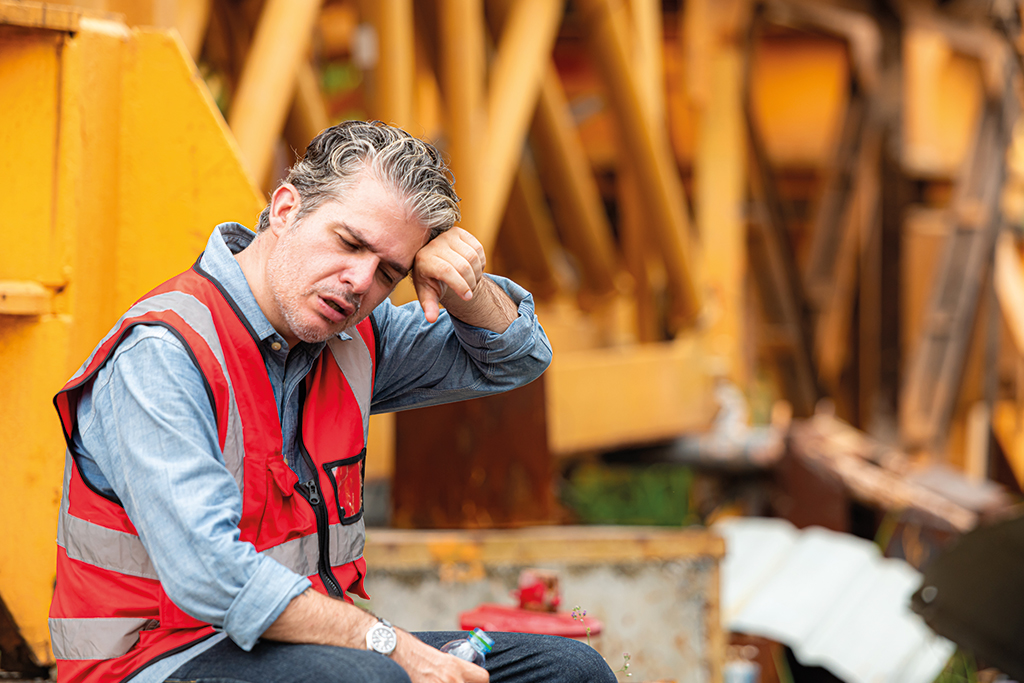
Working in hot weather, The heat, humidity and direct exposure to the sun's rays increase the risk of heat stress, dehydration, distraction and workplace accidents, especially during the summer months. Excessive heat, humidity and direct exposure to sunlight increase the risk of heat stress, dehydration, distraction and work accidents. It is therefore vital for employers to reorganize working conditions according to the effects of hot weather.
Sürmen OSGB, offers professional solutions for the protection of personnel working in hot weather conditions, providing all-round support from risk analysis to site inspections, from training to legal consultancy. In this article, working in hot weather health impacts, legal obligations and precautions to be taken.
You too. OSGB if you are looking for a company Sürmen OSGB and get detailed information.
Istanbul OSGB If you are in search of companies Sürmen OSGB immediately with Communicationswitch to.
The Impact of Global Warming on Working Life
Global warming is one of the biggest environmental problems of the 21st century, deeply affecting every aspect of life. With the increase in the accumulation of greenhouse gases in the atmosphere, temperature averages have risen worldwide, which has disrupted the balance of the seasons and caused severe heat waves to become more frequent and longer lasting, especially in summer. The impact of this phenomenon on working life is extremely serious. Especially for those working outdoors or indoors where air conditioning systems are inadequate working in hot weather is not a matter of comfort; it is a source of danger with life-threatening risks.
Working in hot weather, It pushes the physiological limits of workers and causes many health problems, especially heat stroke, heat exhaustion and dehydration. It also increases the risk of occupational accidents with effects such as distraction, prolonged reaction time and decreased cognitive functions. This situation not only threatens the health of the individual, but also negatively affects productivity, service quality and business continuity in the workplace.
In this context, employers and employees, working in hot weatherIt is of utmost importance to develop a holistic approach against hot weather. This guide examines the effects of working in hot weather, taking into account sectoral differences; employee health, employer obligations and OHS solutions are addressed from a comprehensive perspective.

Which sectors are affected by working in hot weather?
Working in hot weather It directly affects sectors, especially those operating outdoors and in enclosed but poorly ventilated spaces.
Workers in many fields, especially in construction, agriculture, mining, energy and logistics, may face heat-related health problems.
Sürmen OSGB, helps protect employees from heat-related risks by developing customized solutions for companies operating in these sectors.
In addition, it is also used in sectors such as furnaces and foundries where high temperature is used indoors. working in hot weather It is vital to follow the rules.
Construction Sector
The construction industry is one of the areas most affected by working in hot weather, as much of the work is carried out outdoors. Surfaces such as reinforced concrete structures, metal surfaces and asphalt absorb sunlight throughout the day, increasing the temperature exponentially. For those working near these surfaces, the ambient temperature becomes noticeably higher than the air temperature.
Risks Associated with Working at Height
Working at height, one of the most critical areas of the construction industry, carries deadly risks when combined with hot weather conditions. Symptoms such as increased body temperature, loss of concentration and dizziness can be life-threatening for a worker working at height. At this point
- Personal protective equipment such as seat belts, hard hats, safety goggles, etc. become uncomfortable due to the heat and are not used correctly, increasing the risk of falls.
- Working in hot weather sweaty hands and difficult control of hand tools, reducing the worker's balance and grip strength.
- Prolonged exposure to UV rays has negative effects on both skin health and visual perception.
Therefore, extra precautions should be taken in areas where people work at height; break times should be increased, work should be scheduled early in the morning or in the cooler hours of the evening and shade systems should be installed.
Agriculture and Livestock
The agricultural sector is directly affected by hot weather due to its seasonal labor-based structure. Workers in fields, greenhouses or animal farms often work in unorganized environments, often unable to meet their basic needs. The lack of shade, portable water stations and adequate rest breaks are significant risks for this sector. In addition, evaporation, which increases with the heat, leads to depletion of water resources and indirectly to a reduction in production efficiency.
Industry and Production
Industrial enterprises operating in closed environments are also affected by hot weather. Especially in sectors such as bakery, foundry, textile, glass and ceramic production, the environment is already at high temperatures due to the existing equipment. When summer temperatures are added to this, indoor conditions can reach levels that human physiology cannot withstand. This reduces worker endurance, increases the rate of defective production and poses health risks. In addition to the ambient temperature, the humidity in the air also rises, making the body's self-cooling mechanism ineffective through sweating.
Logistics and Transportation
Drivers who stay in closed vehicle cabins for long periods of time may experience symptoms such as distraction, insomnia and fatigue, especially in vehicles with inadequate air conditioning systems. While this increases the risk of traffic accidents, for warehouse personnel, the heat can cause serious occupational accidents such as loss of reflexes and muscle cramps during transportation, loading and unloading.
Tourism and Service Sector
Staff working in hotel kitchens, outdoor activities or beach service areas are often in constant motion in cramped and hot environments without air conditioning. The lack of rest opportunities, especially during periods of customer density, increases the stress level with the heat, negatively affecting both employee health and customer satisfaction.
You too. OSGB if you are looking for a company Our Services You can visit our page.
Legal and Ethical Obligations of the Employer
Legal Regulations on Hot Weather in Turkey
In Turkey working in hot weather Although there is no directly regulated temperature limit, Law No. 6331 on Occupational Health and Safety obliges employers to “protect employees in terms of health and safety” in general terms.
Accordingly, employers are responsible for taking measures to protect employees from heat stress and similar environmental risks.
Sürmen OSGB, makes it easier for employers to fulfill this responsibility by creating risk assessment reports and precaution plans in accordance with legal legislation.
Working in hot weather appropriate break arrangements, water supply, shaded areas and personal protective equipment are essential for legal compliance.
Importance of Risk Assessment
No. 6331 Occupational Health and Safety Law’According to the Law on Workplace Safety, one of the main obligations of the employer is to identify the hazards present in the workplace, analyze the risks that may be caused by these hazards and take appropriate protective measures against these risks. In this context, heat-related risks should be at the center of risk assessment studies, especially during the summer period.
When conducting a risk assessment, not only the ambient temperature but also many other factors such as the physical workload, age, health status (e.g. cardiovascular diseases, hypertension, diabetes), types of personal protective equipment used and the availability of break systems should be taken into account. The specific conditions of different lines of work should also be included in the assessment. For example, a construction worker doing heavy outdoor work is not exposed to the same heat stress as a waiter working in a kitchen without air conditioning.
Adaptation of Working Hours
It is of great importance to restructure work scheduling during the period between 11:00 and 16:00, when temperature increases are most intense. Employers should plan their workforce organization in such a way that employees are less exposed during these hot hours. Measures that can be taken in this context are as follows:
- Starting work early in the morning and minimizing work in the midday heat,
- Extension of working hours with a shift system in the afternoon,
- Ensuring that work is carried out on night shifts when necessary,
- Reducing working hours on days that are too hot, especially during periods of heat wave warnings, or not working except for essential tasks.
Such practices not only protect employee health, but also contribute to the long-term benefit of the employer by preventing work accidents, production losses and employee absenteeism.
Provision of Break, Rest and Cooling Areas
The performance of workers in high temperatures declines rapidly, increasing error rates and reducing productivity. To compensate for this, regular and adequate breaks are essential. In addition, the areas where these breaks will take place must also have suitable conditions.
- Providing natural shade in break areas or installing artificial shade systems such as awnings,
- Installation of fans, coolers or air conditioning systems,
- Water dispensers with refreshing drinks, portable water stations,
- If possible, have auxiliary materials such as ice packs, cold towels, cooling sprays,
- Preparation of hygienic, comfortable areas to sit during rest.
These areas are critical for employees to recover quickly and remain productive.
Training and Awareness Activities
Most of the health problems caused by hot weather can be prevented by recognizing early symptoms and taking precautions. However, in order to achieve this, employees need to have sufficient knowledge. For this reason, employers should conduct training and awareness-raising activities at regular intervals. The content of these trainings should cover the following topics:
- Symptoms of heat exhaustion, heat stroke and heat cramps,
- Diet and beverage choices to prevent fluid and mineral loss,
- Use of appropriate clothing and personal protective equipment,
- First intervention steps to be taken in emergencies,
- Awareness to observe coworkers and report in case of danger.
It is recommended that trainings should not be limited to the transfer of theoretical knowledge, but should be planned to create behavioral change through practical and interactive methods.
WBGT (Wet Bulb Globe Temperature) Index and Measurement Process
The WBGT, or Wet Bulb Temperature Globe Index, is an internationally standardized measurement method for assessing the degree to which an environment is exposed to heat stress. The index is based on three key components:
- Ambient temperature (dry bulb temperature)
- Ambient humidity (wet bulb temperature)
- Radiant heat (black globe temperature)
Employers should have these parameters measured by accredited organizations to assess the total heat stress to which employees are exposed. For example:
- For light work: Precautions should be taken if WBGT is above 30°C.
- For medium-duty jobs: Health risk starts at values above 28°C.
- For heavy work: 26.7°C is considered the critical limit.
WBGT measurements should be made in different parts of the workplace, at different times and at different heights. In addition, these measurements should be carried out periodically, especially during the summer months, and their effects on workers should be investigated.
The Effects of Working in Hot Weather on Employee Health
Risk of Heat Stress, Sunstroke and Dehydration
Working in hot weather, The sweat loss disrupts the heat balance of the human body and can cause serious health problems, especially in jobs that require intense physical activity. Workers lose excessive fluid through sweat, and when this loss is not replaced thirst, electrolyte imbalance and heat stroke become inevitable. Prolonged exposure to sunlight causes a rapid rise in body temperature, which can lead to loss of consciousness, fainting and even heart attacks.
Sürmen OSGB, offers preventive trainings, site inspections and personal protective equipment consultancy to minimize the health risks of teams working in the field, especially during the summer months.
Employers to act consciously on this issue, working in hot weather It is of great importance in terms of preventing occupational accidents and health problems that may occur under such conditions.
Productivity and Distraction
People working in a high-temperature environment suffer from reduced mental performance, reduced attention span and an increase in simple mistakes. Working in hot weather, not only physical fatigue, but also mental burnout. This can lead to misuse of machinery, omission of safety precautions and equipment failures.
Sürmen OSGB, In order to prevent such situations, the company offers strategic solutions such as special working hours planning, increasing break times and employee trainings. Because maintaining the continuity and quality of work is as critical for businesses as ensuring the safety of employees.
It should not be forgotten that, working in hot weather threatens not only physical health but also the safety of work.
Risks for Workers with Chronic Diseases
For individuals with chronic diseases such as hypertension, heart disease, diabetes or respiratory conditions working in hot weather, means higher risk. In these individuals, heat-related stress progresses much faster and can lead to serious complications. For example, heat stroke, blood pressure crises or shortness of breath can make it impossible for a chronically ill worker to work in the field.
Sürmen OSGB, By evaluating the health information of employees in accordance with the principle of confidentiality, it creates alternative task plans or special precaution sets for personnel with chronic diseases. Thus, both the workforce is protected and a productive working environment is provided without jeopardizing employee health.
Working in hot weather, The risk is at different levels for each employee; therefore, customized solutions should be developed according to the needs of each individual employee.
Personal Precautions and Awareness
Working in hot weatherAlthough the risks posed by the workplace can be mitigated to a large extent by measures taken by the employer, the individual awareness and daily behavioral preferences of employees play as decisive a role as systemic measures. At this point, employees need to prepare themselves both physiologically and behaviorally.
Thermal Adaptation Process
At the beginning of the summer season, the body undergoes a natural process of adaptation to the increase in temperature. This process can take several days to several weeks. Intensive work without adaptation increases the risk of heat stroke. Therefore, employees:
- Gradual entry into the season,
- Start with short-term and light work in the first days,
- It is recommended to move by listening to body temperature.
Fluid and Electrolyte Support
The body loses fluids and minerals through sweating. The lost fluid should be replaced with water and minerals with drinks containing sodium, potassium and magnesium:
- The minimum daily fluid intake should be 2.5 - 3 liters; this rate should be increased as physical activity increases.
- Drinks such as buttermilk and mineral water should be preferred and sugary carbonated drinks should be avoided.
- A light, vegetable-based diet should be adopted instead of excessively salty and fatty foods.
Use of Clothing and Protective Equipment
Clothing choice plays a big role in adapting to hot weather. Synthetic, dark-colored and tight-fitting clothes increase body temperature and make it difficult to sweat:
- Cotton, light-colored, loose and breathable clothes should be preferred.
- Sunglasses, wide-brimmed hats, UV protective accessories should be used.
- Mandatory personal protective equipment (helmet, belt) should be ergonomic and sweat-reducing.
Symptom Recognition and Early Intervention
Workers should be able to recognize the signs of heat stroke and heat exhaustion and, when these symptoms occur, should immediately rest, seek shade and, if necessary, call for help. Early intervention is life-saving.
Symptoms:
- Severe headache
- Fast pulse
- Nausea and dizziness
- Dryness, redness or pallor of the skin
- Impaired concentration and fainting
IMPORTANT: In case of any of the above-mentioned symptoms, work should be interrupted and the health unit should be consulted, and if it continues, referral to a health institution should be provided.
A Safe and Sustainable Approach to Working in Hot Weather
It should not be forgotten that with global warming, hot weather is not only a result of natural conditions; it is now a safety problem that needs to be managed strategically in workplaces. Ignoring this problem means both putting human life at risk and weakening the productivity of the workforce in the long term.
This guide aims to improve the safety of every individual working in hot weather conditions, remind employers of their legal and ethical responsibilities and strengthen response capacity.