
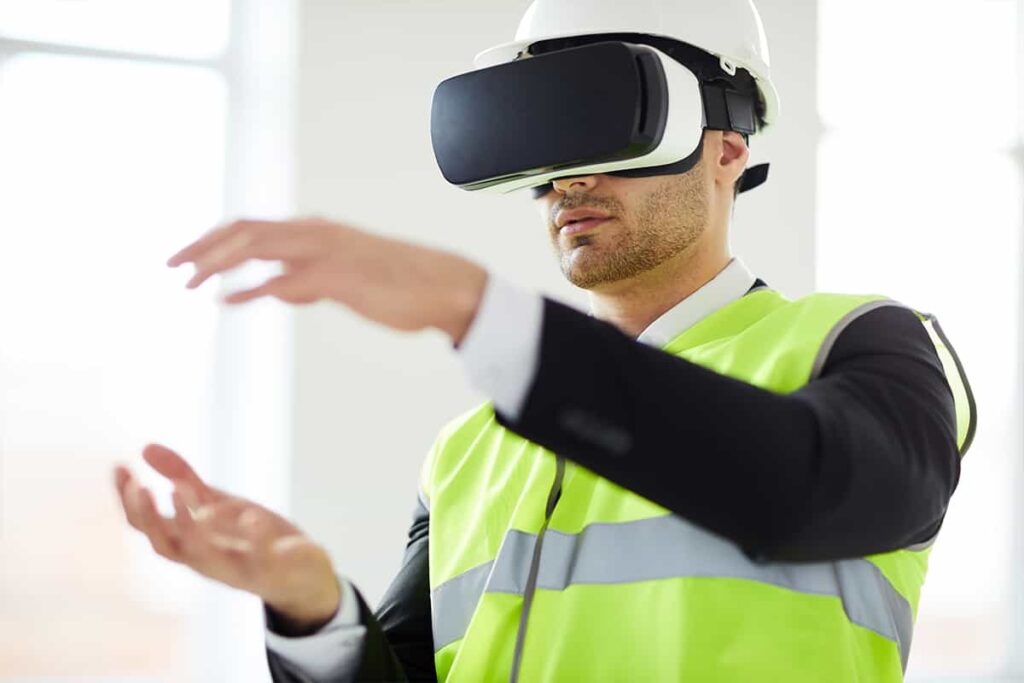
Technological advances are creating new opportunities in occupational health and safety (OHS). Virtual reality (VR) is a technology that stands out among these advances and has the potential to revolutionize occupational safety practices.
The focus of OHS efforts has always been on prevention: Diagnosing and managing risks in the workplace, developing strategies to prevent hazardous situations. Virtual reality makes major contributions in these areas.
Simulation and Training
One of the most important aspects of OHS is to train workers against various risks. However, while traditional training methods often convey theoretical knowledge, practical application is often lacking. Virtual reality can fill this gap. VR training simulations offer employees the opportunity to experience various hazardous situations and learn how to act safely. These can include falls from heights, fire, electric shock and many other potential hazards.
Risk Assessment
Virtual reality can also be used to identify and assess risks in the workplace. For example, it is possible to digitally recreate a construction site or factory and then model potential hazards and risks. This method provides a new way to understand hazards and risks in the workplace and can help safety professionals make more effective decisions.
Implementation and Control
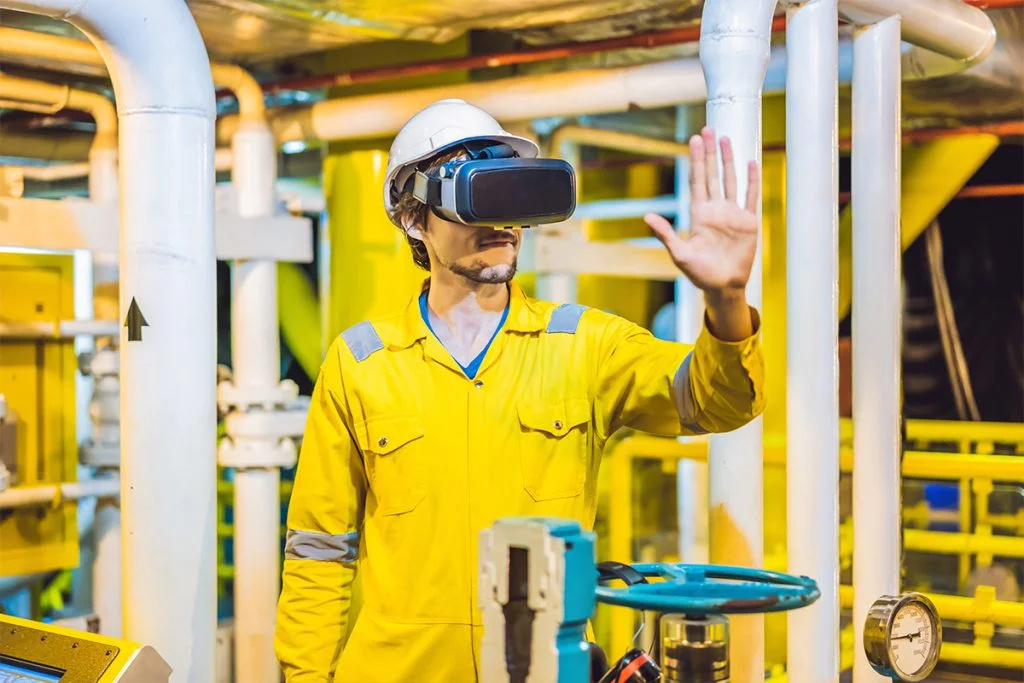
Virtual reality can also play an important role in the implementation and control of occupational health and safety solutions. Especially for remote workers, it may be possible to carry out training and assessments in a low-risk environment provided by VR. Furthermore, real-time data collection and analysis can be used to evaluate and improve the effectiveness of workplace safety procedures.
OHS studies with virtual reality will make great contributions to occupational safety in the future. This technology can enable more effective training programs, more comprehensive risk assessments and more efficient implementation and control processes. This will make workers safer in the workplace.
Virtual reality is predicted to continue to grow in the field of occupational health and safety. Current technological advances are enabling the development of more complex and realistic simulations that can help prevent accidents in the workplace. Furthermore, data collection and analysis capabilities will further accelerate the process of evaluating and improving the effectiveness of safety protocols.
Artificial intelligence and machine learning technologies combined with virtual reality are also promising in the field of occupational health and safety. These technologies can be used, for example, to predict potential hazards, ensure worker safety and personalize training processes.
Virtual reality brings a whole new dimension to occupational health and safety. However, in order to utilize the full potential of this technology, both employers and employees need to develop the skills to understand and effectively use these new tools. Effective use of virtual reality technology will result in the potential to raise safety standards in the workplace and prevent occupational accidents.
Virtual reality training has several advantages and disadvantages. Here are some of them:
Advantages:
- Realistic Simulations: Virtual reality can simulate the real world, giving users the chance to apply their theoretical knowledge in a practical situation. This is especially important for learning how to manage dangerous situations.
- Safety Virtual reality simulates risky or dangerous situations in a safe environment. This means that workers can develop their skills without being exposed to potential hazards.
- Error Forgiveness: Mistakes made in a virtual environment are harmless, unlike mistakes made in the real world. This removes the fear of making mistakes in the learning process and encourages users to try new things.
- Accessibility: Virtual reality training programs can be accessed from anywhere in the world, enabling the expansion of educational opportunities.
Disadvantages:
- Cost: Virtual reality technology can still be quite expensive. The purchase of the devices, the development and maintenance of the software, and constant updates can add up to a significant cost.
- Technological Limitations: Not all virtual reality experiences are created equal. Cheaper systems can often deliver lower quality experiences, which can reduce the effectiveness of training.
- User Discomfort: Virtual reality can cause dizziness, nausea or headaches in some users, which can make long-term use difficult.
- Getting Used to Technology: Not all users may adapt quickly to new technologies. Some employees may resist virtual reality training or have difficulty learning the technology.
These advantages and disadvantages are factors that employers should consider when determining the place of virtual reality training in the workplace.
As Sürmen OSGB, it is our priority to follow and adopt continuous innovations in occupational health and safety. We understand that technological advances, especially virtual reality, will play a major role in occupational health and safety training and we are taking steps in this direction.
In the near future, we aim to expand and develop such innovations in our occupational health and safety trainings. This technological investment will make our training processes more effective and further increase the safety of our employees.
As always, the safety of our employees is our top priority. By using technology, we can fulfill our commitment to creating a safer working environment. Innovation is part of our effort to continuously improve our working environment and we will continue to move in this direction in the future.