
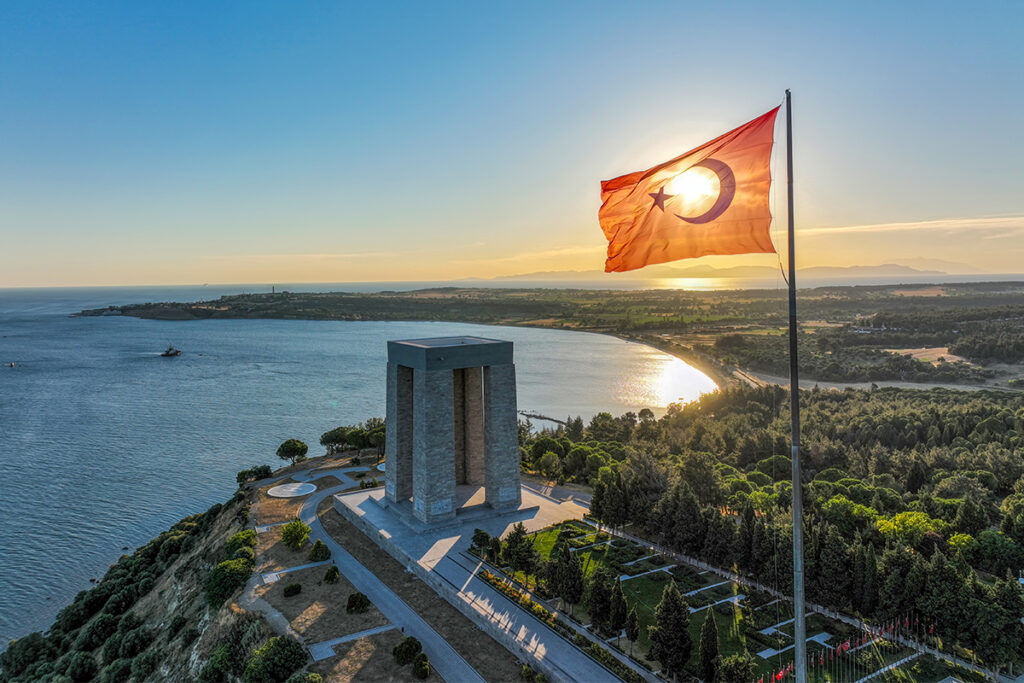
The March 18 Çanakkale Victory is one of the turning points in Turkish history and is recorded as a great victory during World War I. This victory symbolizes the strategic importance of the Dardanelles and the determination of the Turkish nation in the struggle for independence.
Historical Importance
The Gallipoli Campaigns were a series of battles that began in February 1915 and lasted until December of that year. These battles took place on the Gallipoli Peninsula and around the Dardanelles. The Allied Powers launched this campaign in order to force the Ottoman Empire out of the war and to reach Istanbul and provide aid to Russia by sea.
Winning the Gallipoli Victory
The heroic struggle of the Ottoman army and the strategic decisions of talented commanders such as Mustafa Kemal Atatürk played a major role in the victory at Gallipoli. In particular, Mustafa Kemal's order to the 57th Regiment, “I do not order you to attack, I order you to die,” symbolizes the determination and sacrifice of the Turkish soldier in defense of the homeland.
Consequences of the War
March 18, 1915 was the date of the repulse of a major naval attack by the Entente on the Dardanelles. This failure prompted the Allies to land troops on the Gallipoli Peninsula. However, this landing operation also ended in failure and the Allies were forced to retreat with heavy losses.
Historical and Cultural Impact
Çanakkale Victory has an important place in Turkish history. This victory is considered to be more than just the winning of a war, but an indicator of what the Turkish nation can afford for the sake of independence and freedom. It was also a war in which Mustafa Kemal Atatürk's leadership skills came to the fore for the first time.
Memorials and Monuments
The Battle of Çanakkale and the Victory on March 18 are commemorated every year in Turkey with various commemorations and events. The monuments, museums and martyrdoms in the city of Çanakkale and on the Gallipoli Peninsula are important places visited to commemorate this great struggle.
The Çanakkale Victory has gone down in history not only as a military success but also as a symbol of national resistance and solidarity. This victory is remembered as one of the most striking examples of the Turkish nation's power of unity and struggle in the face of adversity.