
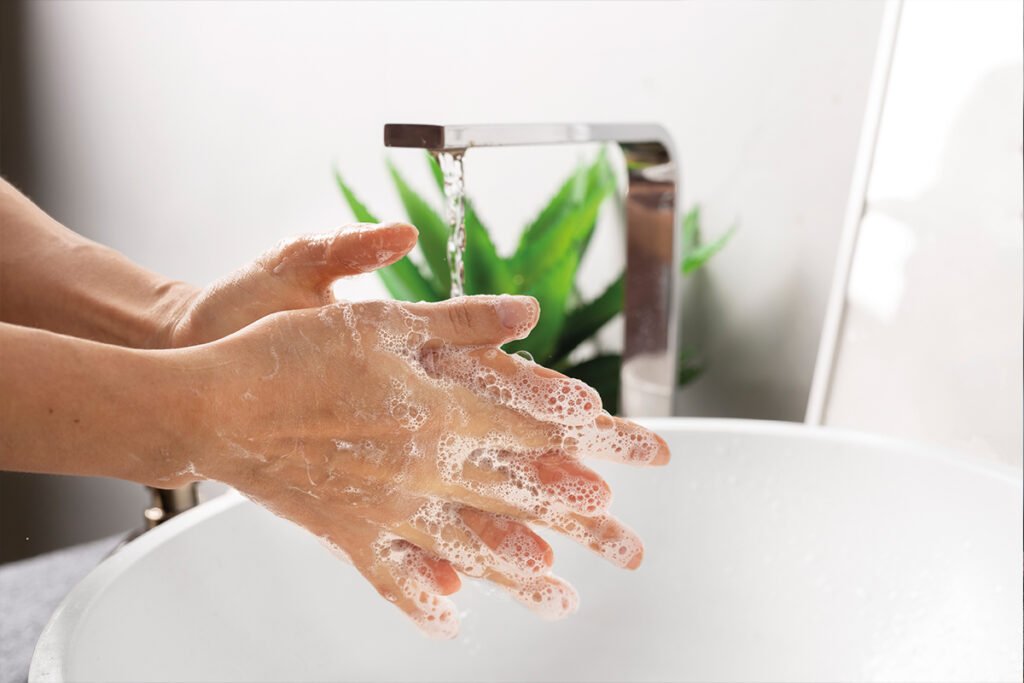
In today's fast-changing world, some habits may change over time, but the importance of hand washing never diminishes. It is a simple action that is often overlooked, but is extremely effective in protecting our health. The pandemic has highlighted the critical role that handwashing plays for individual and community health.
Hands Carriers of Invisible Dangers
Our hands are not only the tools that perform our physical work, they are also the organs through which we make first contact with countless microorganisms. From the pages of books to shopping baskets, from surfaces in public places to our personal belongings, we can carry microorganisms everywhere we touch. This micro-world can sometimes be harmless, while other times it can seriously threaten our health.
The Art and Science of Hand Washing
Effective hand washing requires attention to detail. Here are the recommended steps for optimal hand hygiene:
Use warm water: Wet your hands with warm water, this will help to distribute the soap more effectively on your skin.
Selection of quality soaps: Dermatologically approved soaps provide maximum cleansing while protecting your skin.
Careful scrubbing: Rub your hands thoroughly for at least 30 seconds. This time is necessary for effective removal of microorganisms.
Clean all areas: It is especially good to clean frequently forgotten areas such as fingertips, under the nails, wrists and palms.
Rinsing Rinse your hands thoroughly with water to ensure that soap and microorganisms are completely removed.
Drying Dry your hands using a disposable paper towel or a clean cloth towel.
Optimal Hand Washing Moments
After being in the toilet, during the food preparation process and after meals
After interaction with pets or other animals
After contact with individuals showing symptoms of the disease or visits to health institutions
After coughing or sneezing
After contact with garbage or other potentially contaminated materials
In conclusion, the habit of handwashing is vital in protecting the overall health of the individual and the community. This simple step can improve our quality of life by preventing the spread of many infectious diseases. By keeping this awareness alive at all times, we can fulfill a social responsibility.