The recent rise in cases of food poisoning in Istanbul has caused serious concern amongst both the public and the authorities. In particular, incidents of food poisoning at mass catering establishments, which have led to hundreds of people being affected simultaneously, have once again placed food safety amongst the city’s most critical agenda items.
Following these developments, the Istanbul Governor’s Office organised a wide-ranging Food Safety Meeting on 19 November, chaired by Governor Davut Gül. Comprehensive decisions were taken at the meeting, covering both mandatory registration and a multi-faceted inspection system. These decisions apply not only to restaurants but also to cafés, fast-food outlets, catering firms, street vendors and the entire food production chain.
24-Hour Uninterrupted Audio and Video Recording in All Establishments
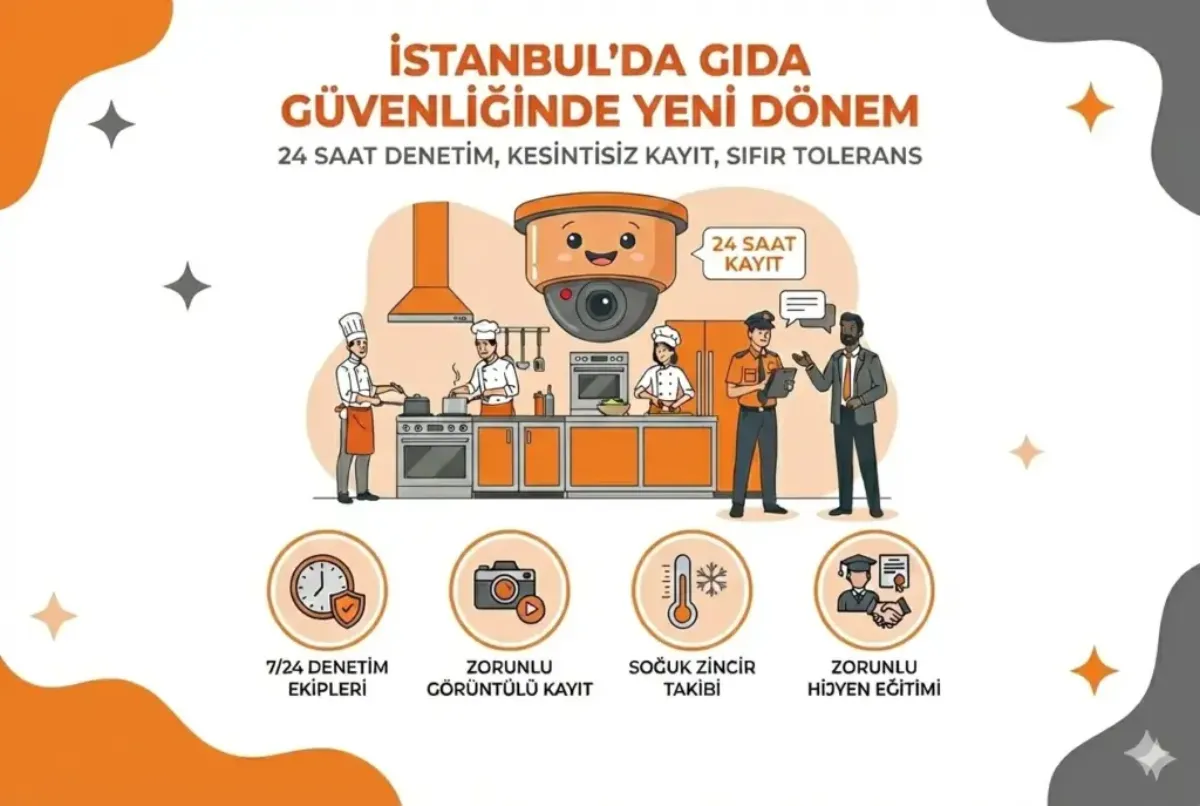
Under the new regulation, it has become mandatory to carry out 24-hour uninterrupted audio and video recording in all areas where food is produced, prepared and served. These recordings must be retained for at least 30 days.
The aims of this measure are:
To prevent inappropriate behaviour that threatens food safety
To monitor whether staff are complying with hygiene regulations
To enable a retrospective review of all stages of the process in the event of a potential food poisoning incident
To increase transparency within businesses
This regulation stands out as a mechanism that will facilitate inspections, particularly in establishments with closed kitchens.
Food Inspection Committees Operating 24 Hours a Day to Be Established Across the Province
The Governor’s Office has announced that food inspection teams will be active at all hours of the day. These teams will:
Restaurants
Supermarket chains
Catering firms
Street vendors
Food production facilities
and similar sectors.
This measure will ensure that inspections, which were previously restricted to specific working hours, can now be carried out at any time of the day. Consequently, a new era has begun for businesses where ‘it is never clear when an inspection will take place’.
Hygiene and Food Safety Training Has Become Compulsory for All Business Owners and Employees
The human factor is the most critical link in the food safety chain. For this reason, the Governor’s Office has made staff training compulsory.
Mandatory training includes:
Personal hygiene rules
Prevention of cross-contamination
Proper storage conditions
Cold chain management
Kitchen sanitation techniques
are among the key topics covered.
This decision aims to address the knowledge gaps frequently observed, particularly in small businesses.
The 72-Hour Sample Retention Requirement Will Be Rigorously Monitored
Every business is obliged to take samples of all the food it sells and store these samples under appropriate conditions for at least 72 hours.
Thanks to this measure:
In the event of a potential food poisoning incident, the products used by the business can be examined swiftly
Businesses’ ingredient freshness and production techniques can be assessed more objectively
‘Who is liable?’ disputes can be resolved through scientific analysis
This is one of the strongest evidence-based mechanisms within the food inspection system.
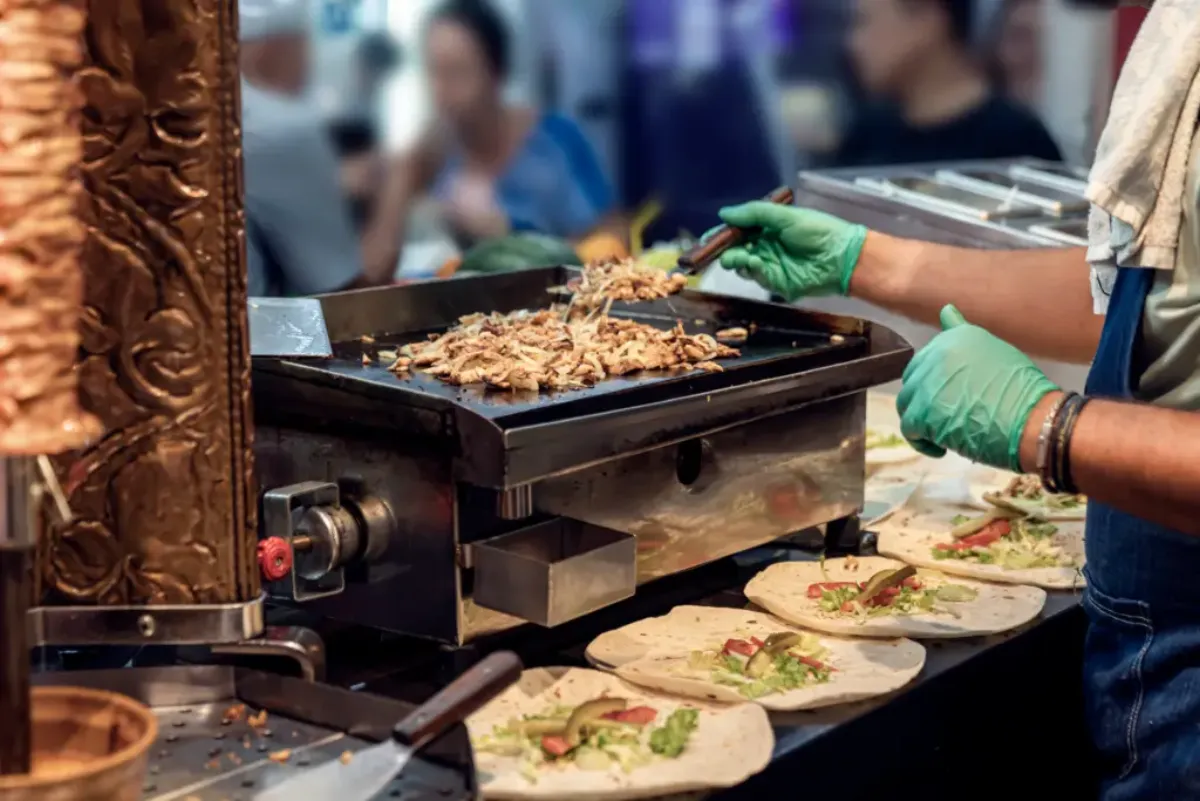
Inspections to Be Stepped Up in All Establishments, Including Street Vendors
Not only restaurants, but also individuals selling food from stalls on the streets will be subject to comprehensive inspections in the new period. In particular:
Inappropriate storage
Sale of food in the open
Products with unclear labelling and origin
will be the focus of the inspections.
The aim of this initiative is to completely eliminate the concept of ‘unregulated food’ across the city.
No Tolerance for Cold Chain Violations
Maintaining the cold chain is of vital importance, particularly for meat, dairy products, sauces and ready meals. The Governor’s Office has announced that it will apply a zero-tolerance policy in this regard.
During inspections, particular attention will be paid to:
The temperatures of the refrigerators in which products are stored
The cooling performance of delivery vehicles
Temperature control systems in buffet and display areas
will be closely examined.
Any breach of the cold chain could result in severe penalties for the business.
Both administrative and criminal proceedings will be brought against businesses selling spoiled or out-of-date products
The sale of spoiled or out-of-date products, one of the most common and serious causes of food poisoning, will now be monitored more closely.
In this context, businesses will face:
Administrative fines
Suspension of operations
Criminal complaints to the public prosecutor’s office
may be subject to such severe sanctions.
It has been announced that this penalty will be applied equally to all businesses, from street food vendors to large restaurant chains.
Pest Control Firms to Be Inspected: Administrative and Legal Action for Non-Compliance
In food safety, pest control is just as critical as hygiene. For this reason, the Governor’s Office has announced that companies carrying out pest control in businesses will also be inspected.
Objective:
To prevent the use of chemicals harmful to health
To prevent unauthorised applications
To ensure pest control records are kept properly
This will also make businesses’ cleaning processes safer.
The Most Critical Recommendation for Businesses in the New Era: Regular Staff Health Screenings and Compulsory Training
To comply with the new regulations, businesses must not only be prepared for inspections but are also now required to carry out regular staff health screenings, hygiene training and health and safety training. Given that the majority of food-borne risks are thought to originate from staff, it is of critical importance that health screenings—such as carrier tests, chest X-rays, blood tests, and nose, throat and stool cultures—are carried out at regular intervals. Furthermore, the hygiene knowledge of kitchen and service staff is a fundamental element of food safety culture.
In this context, mobile solutions that offer significant convenience to businesses are becoming increasingly important. Sürmen OSGB carries out staff screenings on the business’s own premises, without any loss of manpower, through its Mobile Health and Laboratory Services offered across Istanbul. Furthermore, as a comprehensive solution partner, it supports businesses by providing the Basic Occupational Safety Training required by the food sector, Hygiene Training delivered by an occupational health doctor, MEB-approved certification processes, and consultancy services to ensure the business is ready for inspections. In this way, businesses can ensure full compliance with Governor’s Office regulations whilst also establishing a healthy and sustainable service standard that instils confidence in their customers.
What is norovirus, how is it spread, and how long does it last? Find out about the symptoms, the hygiene rules to prevent an outbreak in the canteen, and what employers need to do.
One of the most insidious problems encountered in the business world is that, even though the risks are right in front of us, they gradually become invisible over time. Constantly in the same environment
The month of Ramadan is not only a period of spiritual purification and renewal for millions of people, but also a time when human physiology and endurance are put to the test
Read more
What should your workplace do about this?
Our team will map out what your workplace needs, based on its hazard class and number of employees.


 Occupational Health and Safety