
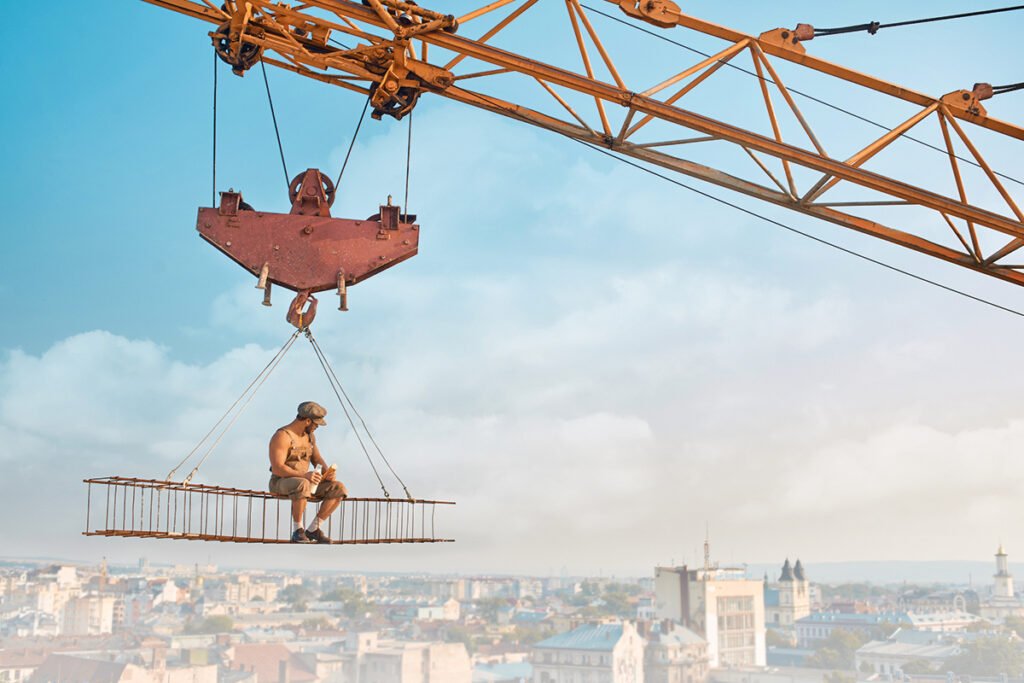
The construction industry is a field that involves a variety of risks, and one of the most important of these risks is working at height. Working at height covers work activities where workers are on a work platform or surface with their feet above the ground. There are many risks that threaten worker health and safety in such activities.
Risks of Working at Height
Falls: This is the most common type of accident in construction. Inadequate protective measures or use of equipment increase this risk.
Material Falling Down: Injuries may occur when tools, equipment or materials used on the work platform fall down.
Bad Weather Conditions: Bad weather conditions such as wind, rain, etc. can cause the work platform to become slippery.
Precautions
Protective Equipment: Workers are required to wear personal protective equipment (PPE). This includes equipment such as helmets, safety shoes and seat belts.
Safety Nets and Guardrails: Safety nets or guardrails should be installed in areas where there is a potential fall hazard.
Practical Training: Workers should be trained on the risks of working at height, the equipment to be used and what to do in emergencies.
Emergency Planning: It is necessary to create a plan that specifies what to do in the event of an accident or emergency.
Working at Height Equipment
Elevators and Platforms: Mobile elevators or platforms are often used for working at height on construction sites. Periodic inspection and maintenance of this equipment is important.
Scaffolding Systems: It is essential to take the necessary safety precautions during their proper installation and use.
Education and Awareness
Informing workers about working at height and raising their awareness through training plays a major role in preventing accidents in this field. Through both theoretical and practical training, workers should be informed about potential hazards and raised awareness of protection methods.
Precautions to be taken during Scaffolding Works
The erection and use of scaffolding is a common process in the construction industry and involves important considerations in terms of occupational health and safety. It is essential to take the following measures to prevent scaffolding-related accidents:
Planning and Design:
Necessary planning should be made before scaffolding erection and appropriate scaffolding type and material should be selected.
The scaffolding should be designed by a specialist and the necessary load calculations for installation should be made.
Suitable Ground:
The ground on which scaffolding will be erected must be level and have sufficient bearing capacity.
Make sure that the ground is stable. Special supports or base plates should be used on soft or slump-prone ground.
Installation and Disassembly:
Only authorized and trained personnel should work during erection and dismantling of scaffolding.
Ensure that all materials used during installation are undamaged and functional.
Safety Equipment:
Personnel working on scaffolding must wear personal protective equipment against falls. This includes equipment such as safety belts, lifelines, etc.
Scaffold edges should be equipped with guardrails and foot boards to prevent falling.
Load Capacity:
It is essential that the load on the scaffold does not exceed the carrying capacity of the scaffold. If heavy materials are planned to be placed on the scaffold, appropriate design and support should be made.
Safety Signs:
There should be appropriate safety signs and informative signage around the scaffolding area.
When working on scaffolding, barriers and warning signs should be placed to prevent passage under it.
Periodic Controls:
After scaffolding erection, the stability and safety of the scaffolding should be checked periodically and especially after bad weather conditions.
Weather Conditions:
Care should be taken whether scaffolding work should be carried out in windy, rainy or snowy weather conditions. Such conditions may adversely affect the stability and safety of the scaffold.
Education:
All personnel accessing or working on scaffolding must have received occupational safety training.
Scaffolding works are activities that require attention and care. The above-mentioned precautions are essential to protect worker health and prevent accidents. Employers and employees should continue their work processes safely by paying attention to the precautions to be taken.