 Articles
UV Exposure in the Workplace: Occupational Risks and Protection Measures
As well as being an indispensable source of energy for sustainable living, solar energy poses serious occupational risks, particularly for those working outdoors
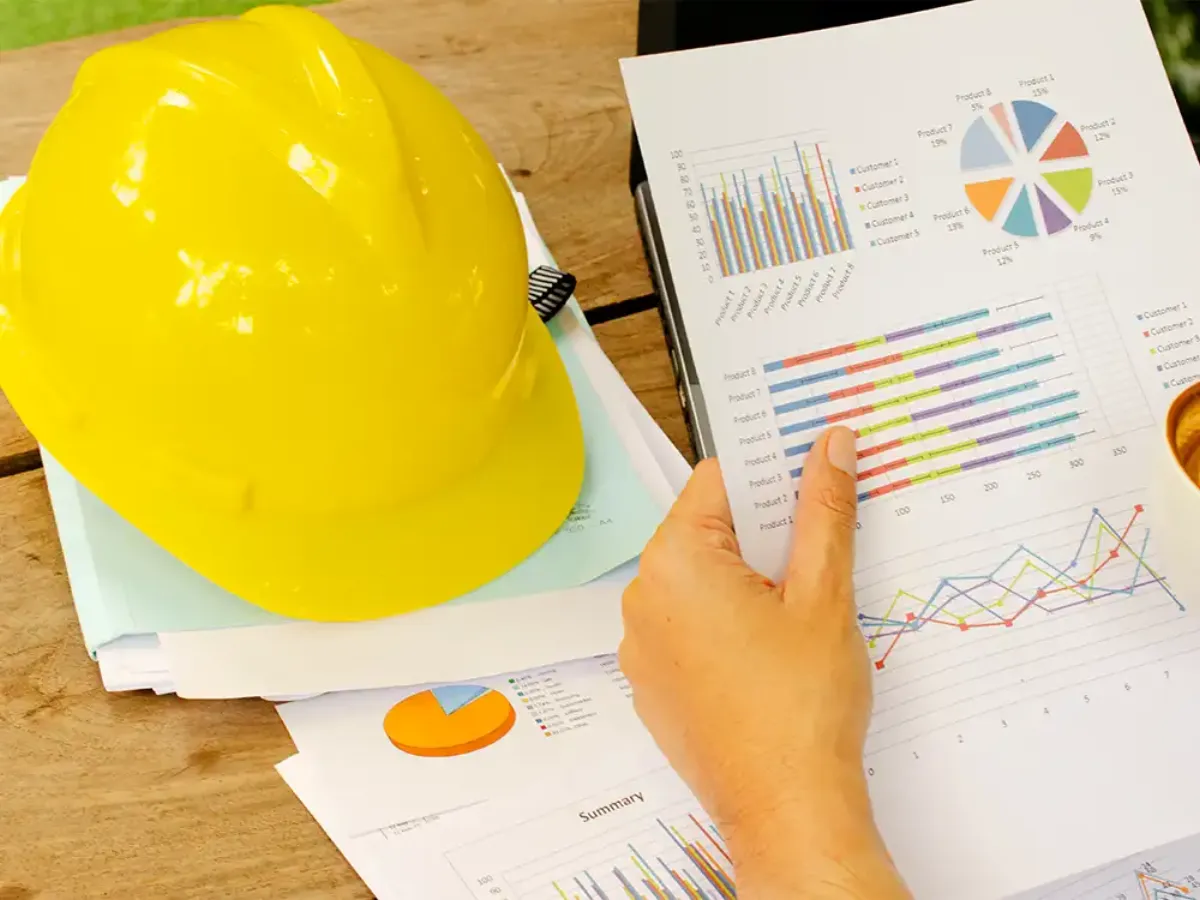
Examples of KPIs for measuring occupational health and safety performance play a critical role in helping modern organisations establish a sustainable and safe working environment.
It is not just the number of workplace accidents; numerous proactive and reactive indicators, such as training rates, the frequency of risk assessments and near-miss incident reports, form the cornerstones of an organisation’s occupational health and safety (OHS) success.
Sürmen OSGB tailors these KPIs specifically to your sector, making performance monitoring measurable and manageable.
If you are looking for an OSGB firm, you can contact Sürmen OSGB to receive detailed information.
If you are looking for an OSGB firm, you can visit our occupational health and safety services page.

Examples of KPIs for measuring occupational health and safety performance are of great importance in enabling organisations to evaluate their health and safety practices quantitatively.
A KPI (Key Performance Indicator), known in Turkish as ‘Anahtar Performans Göstergesi’, is a measurable value that indicates the extent to which a specific target has been achieved.
In the field of occupational health and safety, KPIs enable the monitoring not only of processes but also of outcomes.
Examples of KPIs used to measure occupational health and safety performance are utilised to assess the effectiveness of the OHS system, identify areas for improvement and build a sustainable safety culture.
For example, training participation rates, the number of workplace accidents that have occurred, reported near-miss incidents or completed risk assessment exercises are all KPIs.
Thanks to these indicators, organisations can monitor not only their legal obligations but also their operational efficiency.
Examples of KPIs for measuring occupational health and safety performance only become truly effective when applied through a systematic approach.
Sürmen OSGB makes occupational health and safety processes measurable and manageable by developing customised sets of KPIs tailored to a business’s sector, risk level and number of employees.
By reporting KPI results periodically, Sürmen OSGB integrates this data into decision-making processes, ensuring not only that OSH performance is monitored but also that it is continuously improved.
One of the most critical metrics among the examples of KPIs used to measure occupational health and safety performance is the number of risk assessments completed.
Identifying hazards in the workplace in advance and taking preventative measures prevents accidents before they occur.
Sürmen OSGB aims to maintain this rate at close to 100 per cent by systematically completing periodic risk assessments.
The number of occupational health and safety training sessions provided to employees and the participation rate in these sessions are key indicators of a proactive approach.
Among the examples of KPIs used to measure occupational health and safety performance, this data reflects the extent to which a safety culture has been adopted within the organisation.
Sürmen OSGB regularly plans training courses in accordance with legislation and ensures they are auditable by documenting the participation of all employees.
Internal audits and emergency drills, such as fire drills, are crucial for identifying shortcomings in implementation and ensuring immediate intervention.
For this reason, this indicator is always included amongst the examples of KPIs used to measure occupational health performance.
Sürmen OSGB ensures these KPIs meet their year-end targets by setting the number of planned audits and drills each year.
The number of near-miss incidents is an effective indicator of the level of awareness in the workplace and employees’ preventive reflexes.
Among the examples of KPIs used to measure occupational health and safety performance, this data represents a crucial step towards achieving zero accidents.
Sürmen OSGB ensures this indicator is monitored by establishing systems that encourage employees to report hazards.
If you are wondering what an OSGB firm can offer your business, you can visit our page via this link.
One of the best-known and most widely used indicators among OSH KPI examples for measuring occupational health and safety performance is the number of workplace accidents.
This data, which directly reflects the organisation’s safety level, plays a critical role in both internal audits and official reporting.
Sürmen OSGB monitors this data on an annual and monthly basis, identifying the root causes of accidents to prevent their recurrence.
The number of days an employee is unable to return to work following a workplace accident measures the loss of manpower and the negative impact on productivity.
As part of the examples of KPIs used to measure occupational health performance, this metric also illustrates the financial impact of workplace accidents on the organisation.
Sürmen OSGB organises rapid intervention and effective rehabilitation processes following accidents to minimise the LTI figure.
Illnesses caused in the long term by factors such as dust, noise, vibration and chemical exposure pose a significant risk to employee health.
The number of reported occupational diseases, which features amongst the examples of KPIs used to measure occupational health performance, assesses the effectiveness of preventive health policies.
Sürmen OSGB ensures early diagnosis through regular health screenings and manages reporting processes correctly.
The severity of workplace accidents must be assessed as well as their number. Whilst the accident frequency rate indicates the density of accidents over a specific period, the severity rate explains the impact of accidents on lost working time.
As examples of KPIs used to measure occupational health performance, these calculations provide important insights into the organisation’s risk profile.
Sürmen OSGB calculates these rates in accordance with international standards and reports them to management on a regular basis.

Examples of KPIs for measuring occupational health and safety performance gain meaning not merely through identification, but through selection based on the right strategy.
KPIs must be selected in a way that is appropriate to the business’s sector, employee profile, scope of operations and risk level.
Sürmen OSGB ensures that targets are realistic, trackable and meaningful by creating bespoke KPI maps for businesses.
Every business may have different occupational health and safety (OHS) priorities. Whilst training rates may be the most important KPI in some workplaces, the number of near-miss reports may be critical in others.
Examples of KPIs for measuring occupational health and safety performance must be tailored to these differences.
Sürmen OSGB establishes a structured framework for performance monitoring by defining indicators that align with employers’ strategic objectives.
For the defined KPIs to be meaningful, they must not remain confined to the occupational health and safety department alone.
Examples of KPIs used to measure occupational health and safety performance must be interpreted in a way that everyone—from management to on-site staff—can understand and contribute to.
Sürmen OSGB disseminates KPI data throughout the organisation via periodic reports and visual dashboard systems.
Tracking KPIs manually is both time-consuming and increases the risk of errors.
Sürmen OSGB provides employers with significant convenience through digital OHS software and automated reporting systems.
Examples of KPIs for measuring occupational health performance can thus be monitored in real time, compared and updated as required.
Examples of KPIs used to measure occupational health performance not only indicate the current situation but are also used to track progress over time.
Measuring KPIs at regular intervals enables trend analysis and provides a clear picture of whether performance is improving.
Sürmen OSGB provides businesses with strategic insights by presenting these analyses in graphical form on an annual basis.
Any decline in occupational health and safety (OHS) practices or KPIs that fail to meet targets indicate areas requiring immediate intervention.
In this respect, examples of KPIs used to measure occupational health and safety performance function as an early warning system.
Sürmen OSGB uses these KPIs to identify areas posing a risk in advance and develop corrective action plans.
An occupational health and safety system that is continuously measured, evaluated and improved evolves over time into an organisational safety culture.
Examples of KPIs used to measure occupational health and safety performance raise staff awareness; this is because, in a system monitored through figures, everyone’s contribution becomes visible.
Sürmen OSGB fosters both awareness and a sense of ownership by involving all staff in this process.
Nowadays, occupational health and safety management is not merely about taking preventative measures; it is a process supported by data analysis, reporting and strategic decision-making.
Sürmen OSGB does not merely monitor KPI data; it also uses this data to help organisations establish safer, more efficient and more sustainable occupational health and safety systems.
Examples of KPIs for measuring occupational health performance are the cornerstone of this strategic improvement process.
ArticlesAs well as being an indispensable source of energy for sustainable living, solar energy poses serious occupational risks, particularly for those working outdoors
 Articles
Long working hours spent in enclosed office environments make the quality of the air we breathe and the thermal comfort of the environment matters of vital importance.
 Articles
The intense competition, expectations of speed and the need to be constantly available brought about by the modern business world mean that employees’ professional and personal lives
Our team will map out what your workplace needs, based on its hazard class and number of employees.